
When choosing porcelain tiles for your home or project, there are a number of things to consider if you want both durability and beauty. Here’s a step-by-step guide with the standards you should know, plus practical tips.
What Is Porcelain & Why It’s a Perfect Choice
- Definition & classification: Porcelain is a type of ceramic tile, but fired at higher temperatures and generally denser. In the ISO/EN world, porcelain tiles fall under the ISO 13006 / EN 14411 standard.
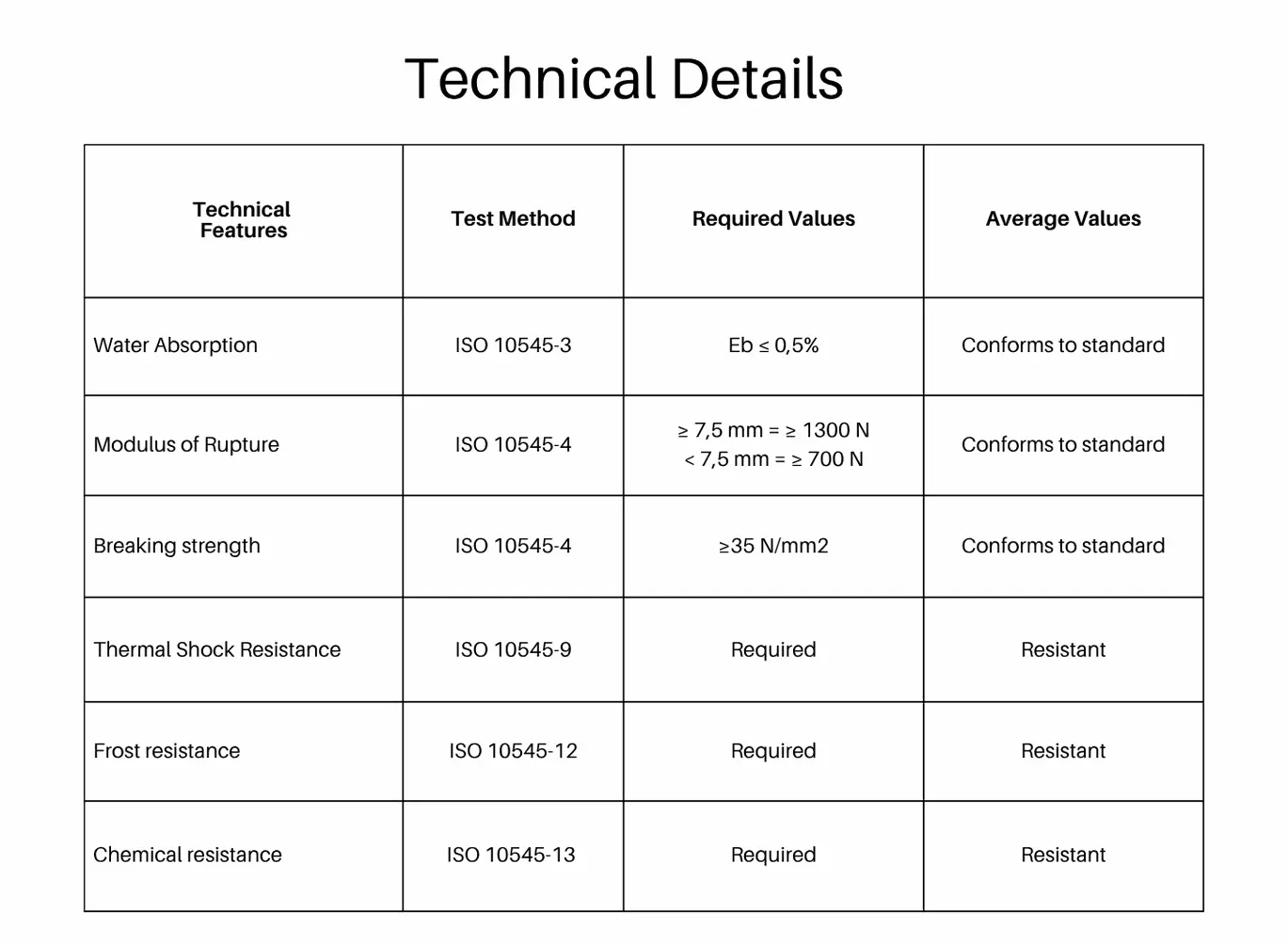
- Water absorption: To be true porcelain (often labelled Group BIa under ISO/EN), tiles must have water absorption ≤ 0.5%. Lower absorption means they are much harder wearing, more frost resistant, less likely to stain.
Key Standards You Should Know
These are UK / European / International norms. When you look at technical data sheets, these are useful benchmarks.
Standard / Test
Typical Requirements
- Look for tiles classified under BIa or similar high-quality groups.
- Defines classification, marking, characteristics of ceramic / porcelain tiles.
- ISO 13006 / EN 14411
What it Measures
- ISO / EN 10545 series
-
Measures how well glazes resist wear on floor use. Useful in busy areas.
-
For high footfall zones (hall, kitchen) choose PEI 3-5. Less in walls or low-traffic.
-
PEI rating (abrasion resistance)
-
How slippery a tile is, especially when wet. Very important in bathrooms, outdoors.
-
Look for declared R ratings (e.g. R9, R10 etc) or specific test values under ISO/EN standards. Many UK tile suppliers indicate this.
-
Slip resistance / coefficient of friction
- A multi-part set of tests, each part dealing with dimensions, strength, absorption, etc.
-
Make sure tiles meet or exceed the tolerance levels, e.g. ± 0.6% for length & width; ±5% for thickness.
Practical Factors to Consider
Besides standards, selecting tiles involves practical choices based on your space, budget, and aesthetic preferences.
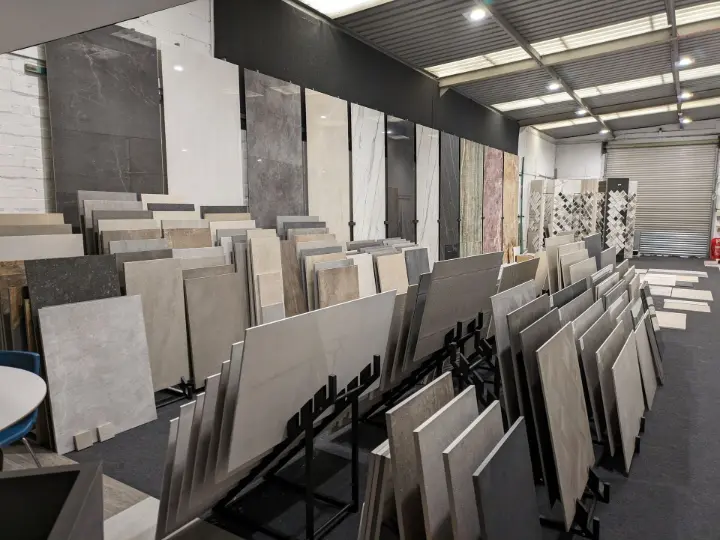
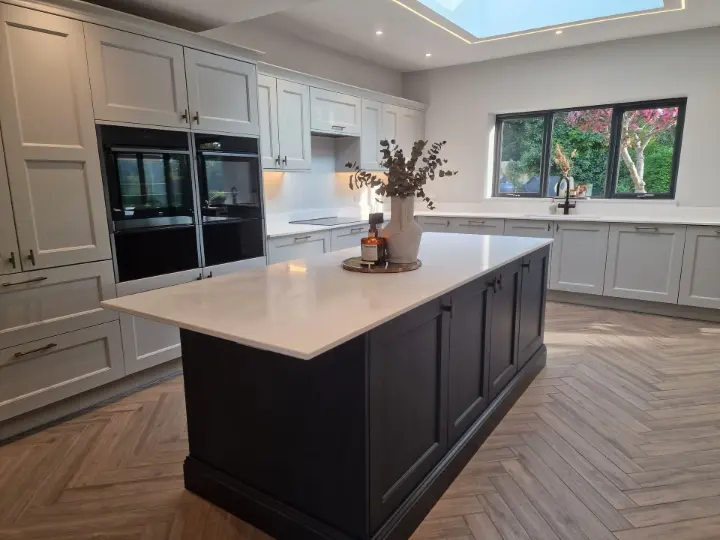
Where you plan to use them
- Floor or wall? Indoor or outdoor? Wet area (bathroom, shower) needs frost and slip resistance.
- Underfloor heating? Porcelain usually copes well, but size & thickness matter.
Tile Size, Shape & Format
- Large format tiles (e.g. slabs, big rectangles) create cleaner, seamless looks but they cost more and need skilled installation.
- Rectified edges (edges milled straight) allow for minimal grout lines. Check specification: many UK suppliers mark “rectified” if so.
Surface Finish & Texture
- Glossy / polished: high shine, elegant but may be more slippery and show marks.
- Matte / textured: more slip resistance, hides wear & dirt better.
- Natural stone effect, wood effect etc: many porcelain tiles mimic other materials. Check the quality—look at consistency of colour, pattern repeat, edge finish.
Colour & Pattern, Shade Variation
- Shade & tone consistency is important. Tiles often have dye lots; mixing tiles from different lots can result in colour mismatches.
- For patterned tiles, look at how the pattern repeats, the borders or edges.
Durability & Strength
- Breaking strength, modulus of rupture: higher values better. Many tiles exceed the minimums under ISO 10545-4. kingdomceramic.com+2antiqueporcelano.com+2
- Abrasion resistance (for glazed tiles): look at ISO 10545-6 or equivalent; deep abrasion volumes; PEI class.
Weather & Frost Resistance
- If outdoors or exposed to frost: the tile must be frost-proof under ISO/EN 10545-12. Also, thermal shock resistance (ISO 10545-9) is relevant. kingdomceramic.com+1
Maintenance & Cleaning
- Porcelain is easier to clean; glazes resist stain better. But polishing vs matte finish will change how often cleaning is needed.
- Grout lines: narrow grout lines are less maintenance but require more precision in laying.
Questions to Ask Your Supplier
When choosing tiles, insist on clear technical specification sheets. Some questions to ask:
- What is the exact water absorption rate (%, under ISO 10545-3)?
- What is the slip resistance / R rating?
- Is the tile frost resistant?
- Is it rectified? What are the tolerances on dimension, thickness, straightness?
- What finish: polished, matt, textured?
- PEI class, abrasion resistance?
- Shade variation / Lot numbers?
Mistakes to Avoid
- Buying purely for appearance without checking technical specs — you might get something that looks good but warps, cracks or slips.
- Mixing batches/lots — even from same product line, small differences can be visible.
- Underestimating installation costs: large/slab tiles, rectified edges, precise laying demand more skilled labour and possibly more cost.
- Ignoring maintenance: high gloss shows scratches, darker colours show dust, light colours show stains.
Summary Checklist
Factor
- Water absorption ≤ 0.5%
- Good strength (break / flex)
- Correct slip / R rating
- Rectified / tight tolerances
- Suitable surface finish
-
Matching shade / batch
Why it Matters
- Durable & less moisture damage
- For floor traffic & longevity
- Safety, especially wet or outdoor areas
- Crisp look + less grout + better alignment
- Balance looks, grip, cleaning ease
- Uniform appearance across space
Conclusion
Choosing the perfect porcelain tile for your space means balancing standards (ISO / EN), practical needs (usage, environment, maintenance), and aesthetic preferences. If you stick to quality tiles that meet or exceed the recognised specifications, and consider size, finish, and usability, you’ll end up with flooring or wall tiles that both look good and stand the test of time.
How to Pick the Perfect Porcelain Tiles for Your Space in the UK